
More code. The same review queue.
The implementation is ready. The architecture decision is not. Work moves faster into the same queue.
Senior engineers. Inside your team.
So why is your company still moving at the same pace?
Quave engineers work alongside your team on the product decisions, architecture, and delivery that AI tools alone do not resolve.
Since 2013Building software that has to run.
100% seniorEvery Quave engineer inside your team.
100+ companiesEngineering experience across real operations.
Where speed stops
Coding is one part of delivery. The rest does not move automatically.
The implementation is ready. The architecture decision is not. Work moves faster into the same queue.
A missing business rule turns a quick implementation into another round of work. The team is busy. The release is still late.
The agent works on one laptop. Integration, permissions, and ownership still need someone to work through them.
The value of engineering judgment
A senior engineer is not valuable because they type faster. They recognize a bad assumption, question the architecture, and know what needs checking before a release.
That is the role Quave brings into your team, with AI as part of how the work gets done.
Market reference: OpenAI Principal Software Engineer, Enterprise Technology Vertical, San Francisco · $441K to $500K + equity.One way of working
The engagement is embedded engineering. The starting point can be a critical delivery, an AI product, or a team trying to make AI useful beyond individual experiments.
Your codebase, product context, and priorities. A Quave engineer works alongside your team on the delivery and the decisions around it.
A migration, an AI feature, or a release that needs to move. The engineer implements, tests, and reviews with your team, using AI where it helps.
Project code, documentation, and agreed deliverables stay with your team. Decisions and working practices are shared in the work, not saved for a final presentation.
Your priorities set the scope. We agree on the engineering work and how to assess progress together.
Engineering in practice
A migration in our own product. Logistics infrastructure for Paris 2024. AI in a client’s data platform. The technical accounts are here to read.
Our own product · framework migration
6 monthsEstimated effort without AI
4 days2 days converting code + 2 days testing
On his fourth attempt at the migration, Filipe used AI to convert the code in two days, then spent two days testing.
A custom AST analysis found more than 180 unawaited async calls after conversion. The findings ranged from fire-and-forget audit and logging calls to a crash-level bug.
The six-month figure was his estimate, not a measured baseline. This is one migration, not a promised timeline for your project.
Quave ONE · Paris 2024 infrastructure
Olympic Games Paris 2024Infrastructure for ALLOHOUSTON’s logistics toolsQuave ONE built a dedicated Paris cloud region for ALLOHOUSTON’s logistics tools during the 2024 Olympic Games, with deployment, DevOps, high availability, and scaling.
The case covers the infrastructure behind Joptimiz and Itineriz, two tools supporting logistics during the event.
Neotrust · AI over governed data
Retail data arrived through reports and CSV exports. Quave helped turn it into a product clients could explore themselves, including a Text-to-SQL agent constrained by the platform’s access and privacy rules.
Sēkr · an AI product in use
A neglected camping app needed a rebuild before summer. Quave connected its location data to a conversational trip planner and shipped the new web and mobile app in under three months.
Enterprise software · a fixed conference date
Quave built the front end for an API management platform in under 30 days, alongside the startup’s own backend team. A working core product was ready for the conference; capabilities such as mTLS came later.
The published case describes the design system, OpenAPI editor, access control, and the split between the two teams. Client identity remains confidential.
Confidential engagement · AI product
A Quave engineer worked on the AI coaching product of a US swimming training platform. The product is in production; the client name and further details remain confidential.
We can discuss the engineering experience within the engagement’s confidentiality limits.

“Quave helped us turn Neotrust from a reporting service into a real product.”
João Francisco MartinsCEO · Neotrust
The team is already there
The engineer joins the team you have. Your product context meets experience from other codebases, architectures, and deliveries.
Alongside your people. Not a parallel team that disappears into another process.
Starting with what works. An existing codebase is the starting point, not a reason to propose a rewrite.
Shared in the work. Implementation decisions and project knowledge remain accessible to the team.
More experience in the room. The same team at the center.
Experience before the current wave
Quave grew around an open-source JavaScript framework created by engineers with roots at MIT. Filipe Névola, Quave’s CEO, previously led the company behind that technology.
Maintaining software other teams depend on, while building with more than 100 companies, is the background our engineers bring into a new codebase.
The people behind the work
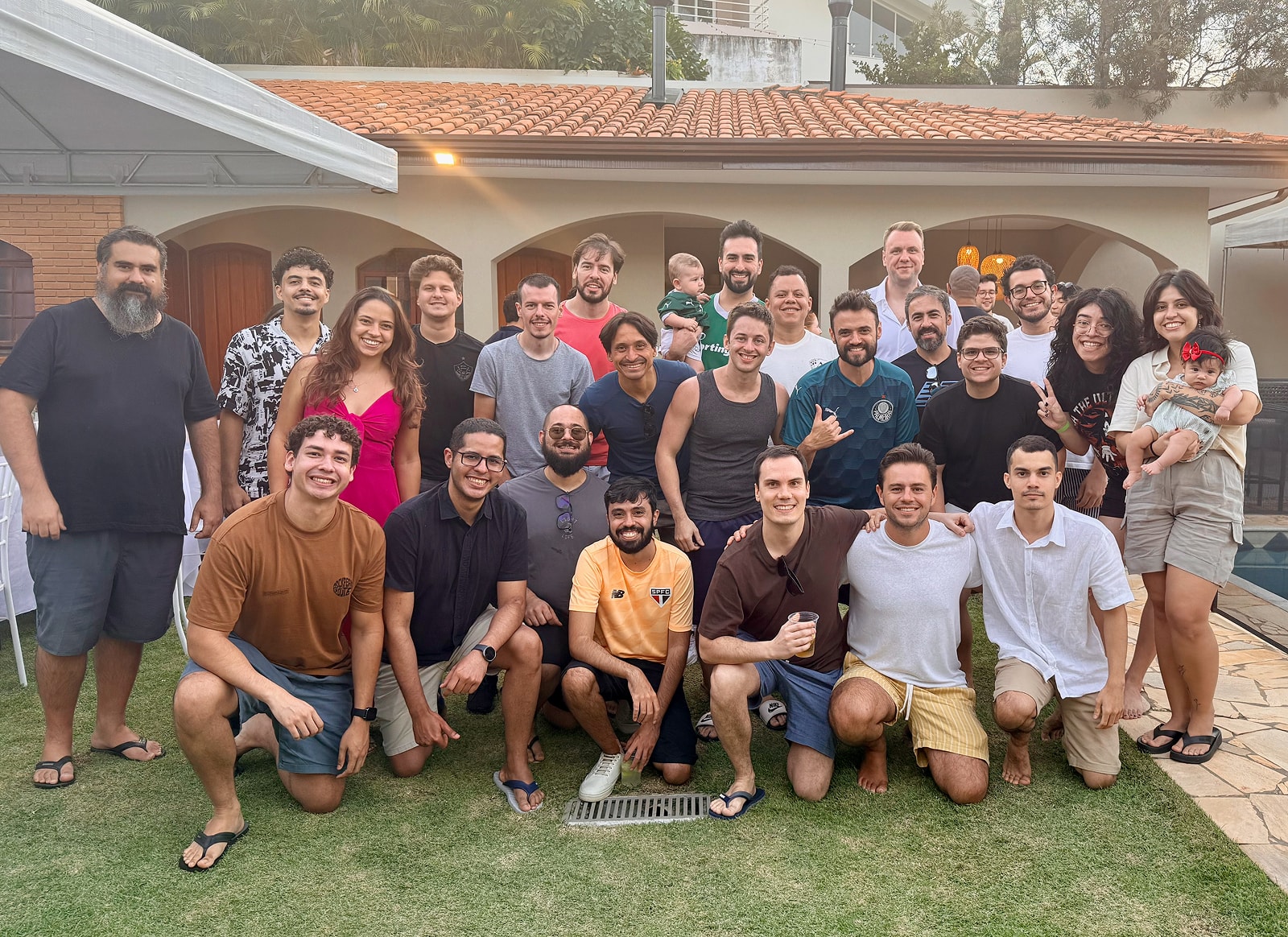
Engineers and colleagues across the United States, Brazil, and Europe, with overlap with US business hours. The people doing the work join the conversation.
Before we talk
The working model is embedded engineering: senior Quave engineers join your team and work on your priorities. Alongside delivery, they help the team put AI, testing, and review into daily practice. Scope and allocation are agreed around the work.
No. Your team brings the business context and sets the priorities. We start with the codebase and tools already in use. Any change needs a reason in your delivery, not a preference for our stack.
No. AI can be part of the product, part of how the software is built, or both. A migration or a difficult release can be the starting point. The scope follows the work, not a requirement to add an AI feature.
Before using a model or tool, we agree with your team on permitted data, access, and review. Your security requirements shape the implementation. A faster workflow is not a reason to bypass them.
Project code, documentation, and the deliverables agreed for the engagement. Third-party tools and open-source components keep their own licenses. Specific ownership and confidentiality terms are agreed in the contract.
One priority: what needs to ship, where it is getting stuck, and what your team has tried. We discuss whether an embedded engineer is a fit. If we work together, scope and measures of progress are agreed for your situation; another project’s result is not a forecast for yours.
A first conversation
What needs to ship? Where is it stuck? We can talk through the work and whether a senior Quave engineer belongs in your team.
No need for a finished brief. We start with the context you have.